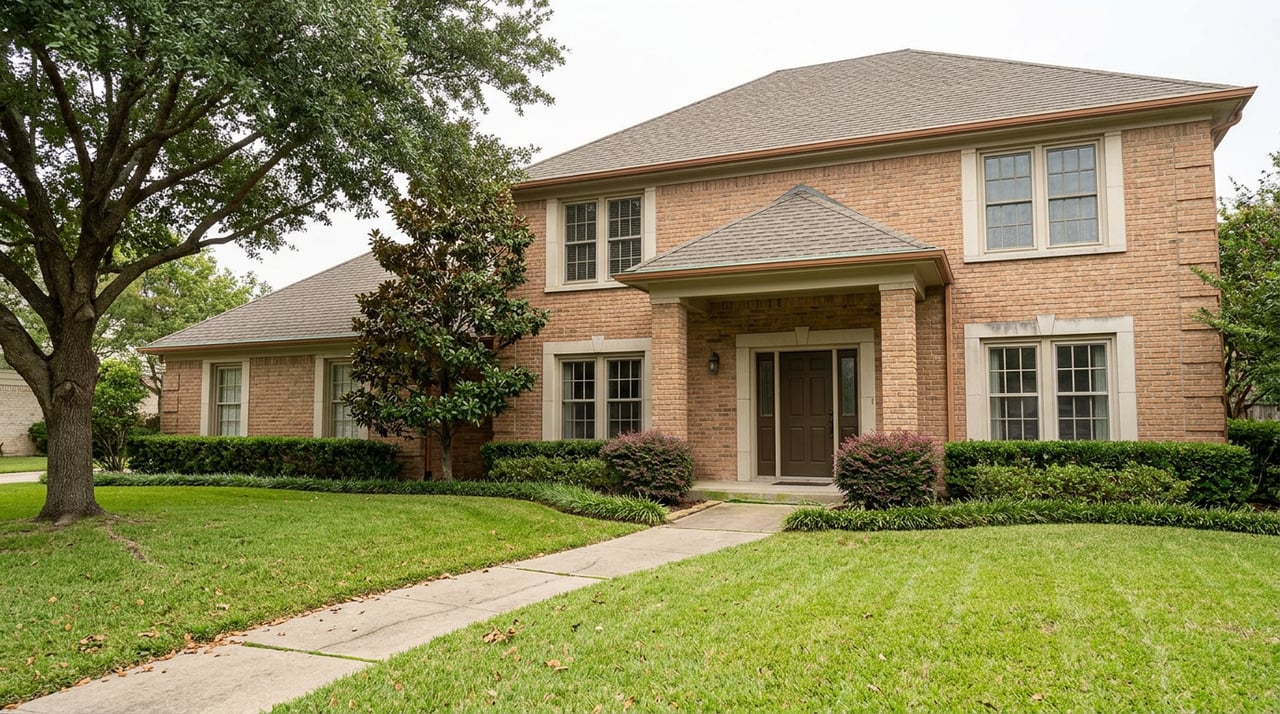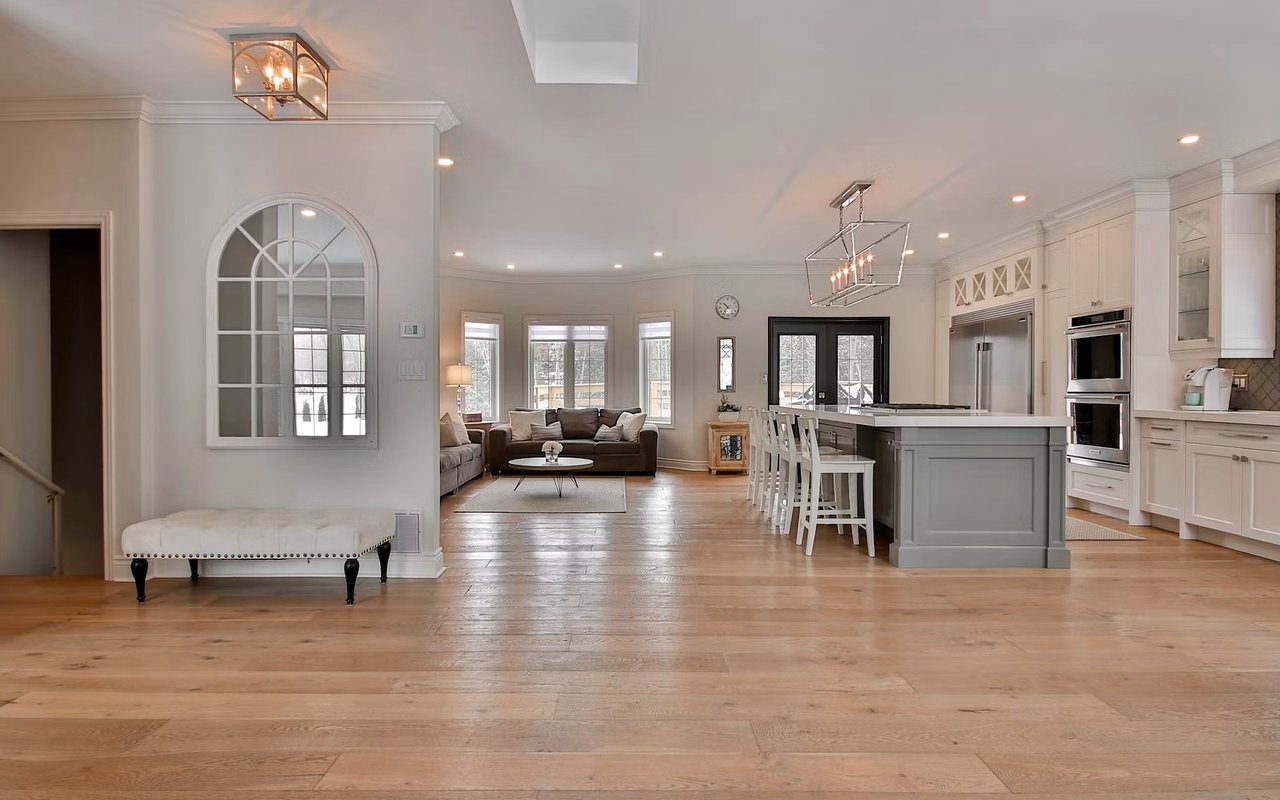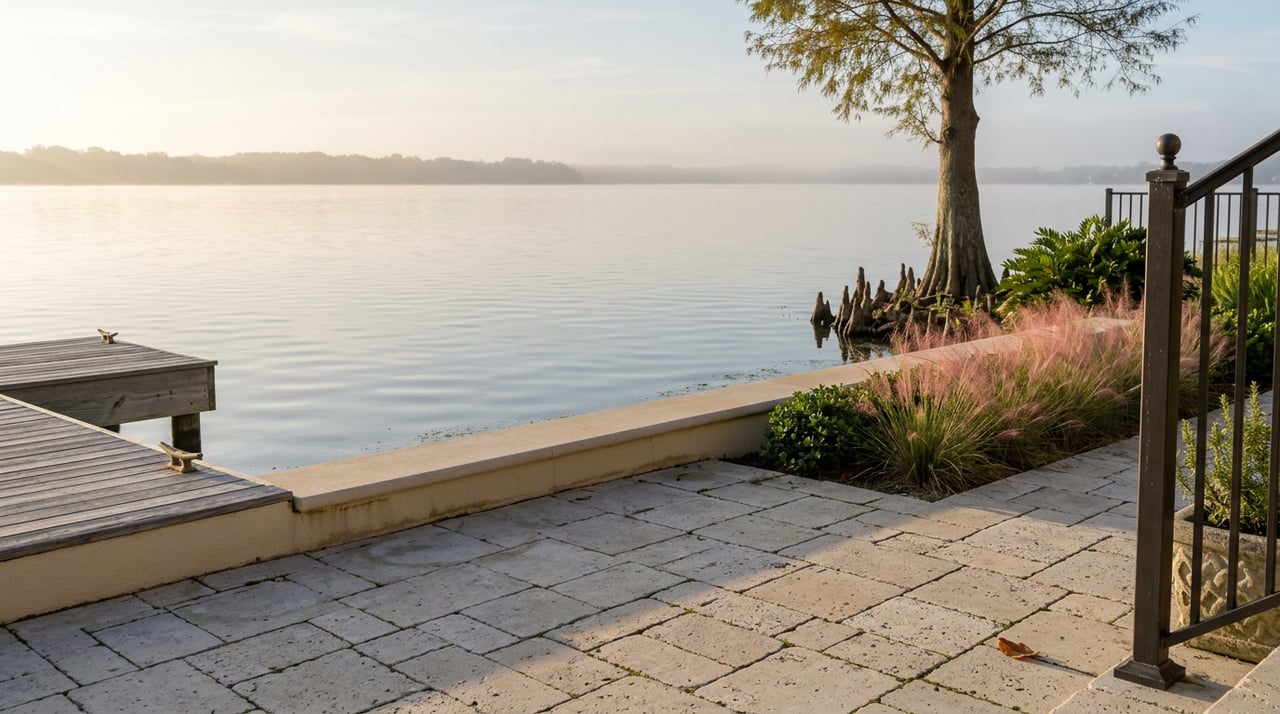
A buyer stands on a dock at golden hour, looks out at 21,000 acres of open water, and decides this is the house. The photo that sold them the showing is the one everyone remembers. The document that actually determines what they pay, and whether the dock is even legal to keep, sits in a file cabinet at the San Jacinto River Authority office and rarely makes it into the listing description at all.
That is the thesis worth sitting with if you are buying or selling waterfront on the Montgomery side of Lake Conroe in 2026: the number on the contract is not set by the view, the square footage, or even the comparable sales down the shoreline. It is set by whether a permit file exists, whether it transfers, and whether the structure it covers still makes sense under how the lake is actually managed today. Two homes with identical docks and identical water frontage can close at very different prices depending on which one has that file in order.
The View Isn't the Asset. The File Is.
Lake Conroe is not a natural lake. It is a reservoir owned and operated by the San Jacinto River Authority, and SJRA's position on private structures is unambiguous: owning waterfront land does not come with an inherent right to build, keep, or maintain a dock, boathouse, or bulkhead on the water in front of it. Every one of those structures requires its own license, and that license can be revoked. A homeowner who has enjoyed a dock for a decade may still be operating on borrowed time if that dock was never properly permitted, or if the permit lapsed and nobody noticed.
This matters more at the closing table than it does on a lazy Saturday afternoon. A buyer's agent who knows the market will ask for SJRA permit numbers before the option period ends. A buyer who does not ask inherits whatever is or isn't on file, along with the liability that comes with it.
What an Unpermitted Dock Actually Costs You
An unpermitted structure does not disqualify a sale, but it does reprice it. Once a missing or lapsed permit surfaces, the negotiation shifts from the sale price to the cost of fixing the paperwork gap, plus a premium for the time and uncertainty involved. If SJRA orders a noncompliant structure removed, that cost lands on whoever owns it at the time, which after closing means the buyer.
The dollar figures give the leverage some shape. A new private dock on Lake Conroe typically runs into the low tens of thousands of dollars for a modest build, more for covered slips or custom work. A boat lift replacement generally falls in the mid-thousands to low tens of thousands depending on capacity. Bulkhead or shoreline stabilization is the widest range and the one that moves a negotiation the most: short sections may run in the low tens of thousands, while longer or engineered runs can reach $50,000 to $150,000 or beyond.
A defended asking price on Lake Conroe starts with a permit file, not a fresh coat of paint on the boathouse.
Those numbers are why sellers who arrive at the listing table with a complete, transferable permit file protect the top of their price range, and why buyers who skip the file end up negotiating against themselves after the inspection period, when their leverage is already gone.
Three Communities, Three Rulebooks
SJRA sets the floor, but it is rarely the only authority a dock has to satisfy. Waterfront pricing on Lake Conroe is not one market with one rulebook. It is several, layered on top of each other by neighborhood.
Walden is the largest community on the lake, spanning multiple sections with separate governing documents that cover everything from vacant lots to condominium units. A shared dock or community slip here means a buyer's agent needs to know which section's rules apply and whether an assessment is pending before assuming the slip comes free and clear.
Bentwater describes itself as a 1,400-acre master-planned community running along 12.5 miles of shoreline, and its architectural review committee holds docks and shoreline structures to design standards that are frequently stricter than SJRA's own minimums. A dock that satisfies the state authority can still fail Bentwater's internal review.
April Sound layers its own architectural review on top of the SJRA license as well. If a prior owner built or modified a structure without getting that internal signoff, the gap tends to surface exactly when a new buyer's agent starts asking questions, which is to say during option period, not before.
Cape Conroe, one of the canal-front communities on the lake, adds a further wrinkle around historical dredging, since canal maintenance and depth changes over the years can carry their own compliance questions separate from the dock itself.
| Community | Extra layer beyond SJRA | What to ask before writing an offer |
|---|---|---|
| Walden | Section-specific governing documents | Which section's rules apply, and is an assessment pending on a shared slip |
| Bentwater | ARC design standards, often stricter than SJRA | Does the existing structure meet current ARC guidelines, not just SJRA's |
| April Sound | Architectural review on shoreline structures | Was ARC signoff obtained for any prior dock work |
| Cape Conroe | Canal and historical dredging questions | Is there a dredging record, and who is responsible for canal depth |
The Lake Itself Isn't Fixed
Here is the part that even careful buyers tend to miss: the lake a dock was designed for and the lake it actually sits on for several weeks every year are not the same lake. Lake Conroe's conservation pool sits at 201 feet above mean sea level, but since 2018 SJRA and the City of Houston, which owns two-thirds of the reservoir's water, have operated under what SJRA calls Active Storm Management. Between April 1 and June 1, the city can request diversions that lower the lake toward 200.5 feet to create storm capacity ahead of forecast rain. A drought contingency plan triggers watering restrictions once the lake drops to 199 feet.
As of early August 2026, the reservoir sat at roughly 98.7 percent full, a healthy number, but the operating range around it is what matters for anyone buying a dock rather than a photograph of one. A dock or gangway designed for a static 201-foot pool can bind, hang, or sit dry during a normal seasonal swing that has nothing to do with drought.
That management is only getting more coordinated, not less. In July 2026, SJRA joined the City of Houston and the City of Humble in launching a joint operations study, reported at roughly $1 million, aimed at coordinating pre-releases between Lake Conroe and Lake Houston once eleven new spillway gates come online downstream, gates that will lift discharge capacity from 10,000 to 78,000 cubic feet per second. The practical takeaway for a Lake Conroe buyer is that the informed question in 2026 is not simply "is this waterfront," it's whether the dock elevation and bulkhead cap were built with the lake's real operating range in mind, not just its postcard number.
The Name on the Listing Isn't Always the Lake You Think
One more distinction is easy to miss and expensive to get wrong. Grand Central Park, a roughly 2,000-acre master-planned community selling from the mid-$300s to around $750,000, is built around its own community lake. That lake is not Lake Conroe. The amenities inside Grand Central Park are real, but the boat behind the house is a different proposition entirely than true Lake Conroe frontage, and search filters and casual listing language blur that line more often than they should. Before falling for a listing photo, confirm which body of water is actually on the other side of the yard.
A Short List Before You Write the Offer
- Request SJRA permit numbers and copies for every dock, lift, bulkhead, or dredging project tied to the property, and get written confirmation of whether the permit transfers at closing or requires a fresh application.
- Pull the HOA resale certificate and the architectural review file, not just a CC&Rs summary, especially in Bentwater, April Sound, or any section of Walden.
- Ask whether the dock and bulkhead were designed with a 200.5-foot operating low in mind, not only the 201-foot conservation pool.
- If the home relies on a septic system, confirm it is registered correctly if it sits within 2,075 feet of the reservoir, since SJRA regulates those systems too.
- Verify which lake is actually behind the house before comparing prices across communities with similar-sounding names.
FAQ
Does a dock permit automatically transfer with the house? No. Some SJRA-permitted structures require notice or a fresh application when ownership changes, which can put the new owner in front of stricter current rules than the ones under which the original dock was approved.
The seller says the dock has "always been there." Does that mean it's grandfathered? Not automatically. Ask for documentation regardless of the dock's age. A verbal assurance is not a permit, and SJRA can still act on a structure with no file behind it.
Does the seasonal lake drawdown affect home value? Not directly, but it affects usability and repair timelines. A dock built for a static 201-foot pool is more likely to need adjustment or repair sooner than one designed around the lake's real operating range.
If you are weighing a purchase or a sale on Lake Conroe this year, the permit file deserves the same attention as the price per square foot. The Mike Seder Group has spent three decades working alongside builders and developers across Montgomery County, and we know which questions to ask before an option period runs out, not after. Schedule Your Concierge Consultation and let's look at the file together before you write the offer.